Riding out of Adelaide
Adelaide is compact, and that is the point: the Adelaide Hills begin about 20 minutes from the city centre, the coast runs south from the suburbs, and the wine districts sit within a day. You can build a serious ride without leaving the state.
There is one rule that catches visitors before they even start riding. To keep the state's producers fruit fly free, travellers into the Adelaide Hills are asked to leave fruit and vegetables at home and buy local instead. Sort that out at the shops rather than at the roadside.
The hills are the local proving ground, the Fleurieu is the coastal ride, and the ranges to the north are the multi-day trip. Anything south or north of the city starts there, and rides out of Adelaide covers the exits and the fruit-fly rules on the way.
Leaving the city on a weekday morning is a much quicker business than doing it on a Saturday.
Gorge Road and Chain of Ponds
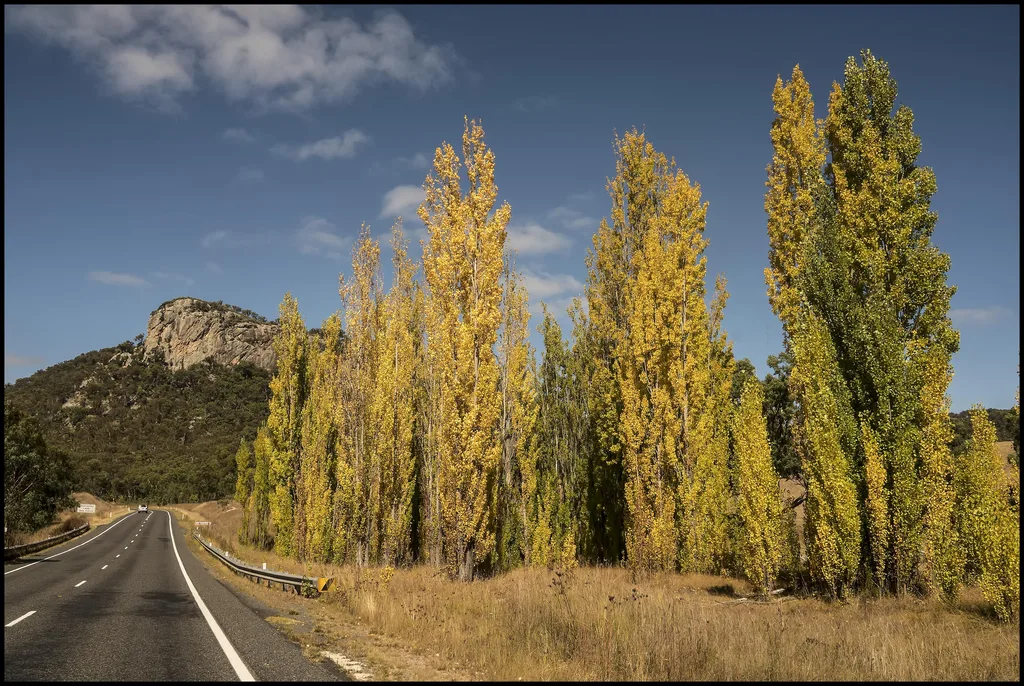
The classic Adelaide hills run leaves the north-eastern suburbs on Gorge Road, which follows the Torrens Gorge out through Cudlee Creek. From there the road carries on past the Chain of Ponds reservoir and towards Gumeracha, a tight, tree-lined climb and descent that locals use as a short morning ride.
It is a compact run with a lot of corners, and it sits close enough to the city that it carries local traffic as well as riders. Ride it for rhythm rather than speed, and give the shaded and damp sections on the southern faces more respect than they look like they need.
- The run is tight and close to suburbia, so it rewards discipline rather than pace.
- Watch for driveways and slow traffic near the towns on the way out.
- Link it with the surrounding hills roads for a longer loop instead of turning straight around.
The gorge road doubles as a local shortcut, so treat every blind corner as though something is coming the other way.
Fleurieu Peninsula and the south coast
South of Adelaide, the Fleurieu Peninsula runs from the McLaren Vale vineyards down to Cape Jervis, with the coastal road on one side and gullies on the other. Deep Creek National Park protects the largest remaining area of natural vegetation on the Fleurieu and sits about 105 kilometres from Adelaide by the park service's own measure.
The park is known for its wildlife — western grey kangaroos, short-beaked echidnas and a long list of birds — and whales can be seen from the coast during their annual migration between June and October. It also closes on days of catastrophic fire danger, and may close on extreme fire danger days, which is the kind of rule that decides a riding day in summer before you have even left home.
The walking trail network inside the park includes sections of the Heysen Trail, so expect walkers where trails meet the road.
- Deep Creek is the largest block of remaining natural vegetation on the Fleurieu Peninsula.
- Five campgrounds are spread through the park, four reachable by two-wheel-drive and one hike-in only.
- Entry fees apply and must be paid before entry.
- Fire danger ratings are the access rule to check on a summer ride; the park service points riders at the CFS bushfire information line.
Summer fire danger changes access to Fleurieu parks faster than the forecast does; check the day's rating before you ride out.
Barossa and Clare Valley
North of Adelaide, the Barossa and the Clare Valley are wine country with good riding through and between the vineyards. The roads are rural rather than spectacular: low traffic, stone towns, long sight lines across vines, and ranges climbing at the edges of each district.
The riding is easy, so the risks are different ones: cellar-door traffic, cyclists on the back roads, and stock and wildlife on unfenced verges. Ride these districts as a touring day rather than a sporting one, and start early before the wine traffic builds. Riders who would rather carry the wine home than strap it to a pannier sometimes do the return leg in a campervan hired in Adelaide, which is a different trip rather than a substitute for the ride.
Riders often link the two districts in one loop, and it is worth deciding which one you actually want. The Barossa is the busier and more compact of the two, with the towns close together; the Clare Valley spreads its stops along a longer, quieter run of road, which suits a day that is more about the riding than the tasting.
- Both districts sit north of Adelaide and work as a day ride or as an overnight stop.
- Cellar-door car parks and narrow town streets are the main hazards.
- Stock and wildlife cross rural roads without warning, particularly towards dusk.
The two districts are close enough to combine, but that turns a pleasant day into a long one.
Flinders Ranges and the Heysen corridor
The Flinders Ranges are the big South Australian ride. Ikara-Flinders Ranges National Park covers approximately 95,000 hectares around the Heysen Range, and the park service measures it at about 454 kilometres from Adelaide — a day's drive that is far better split across two.
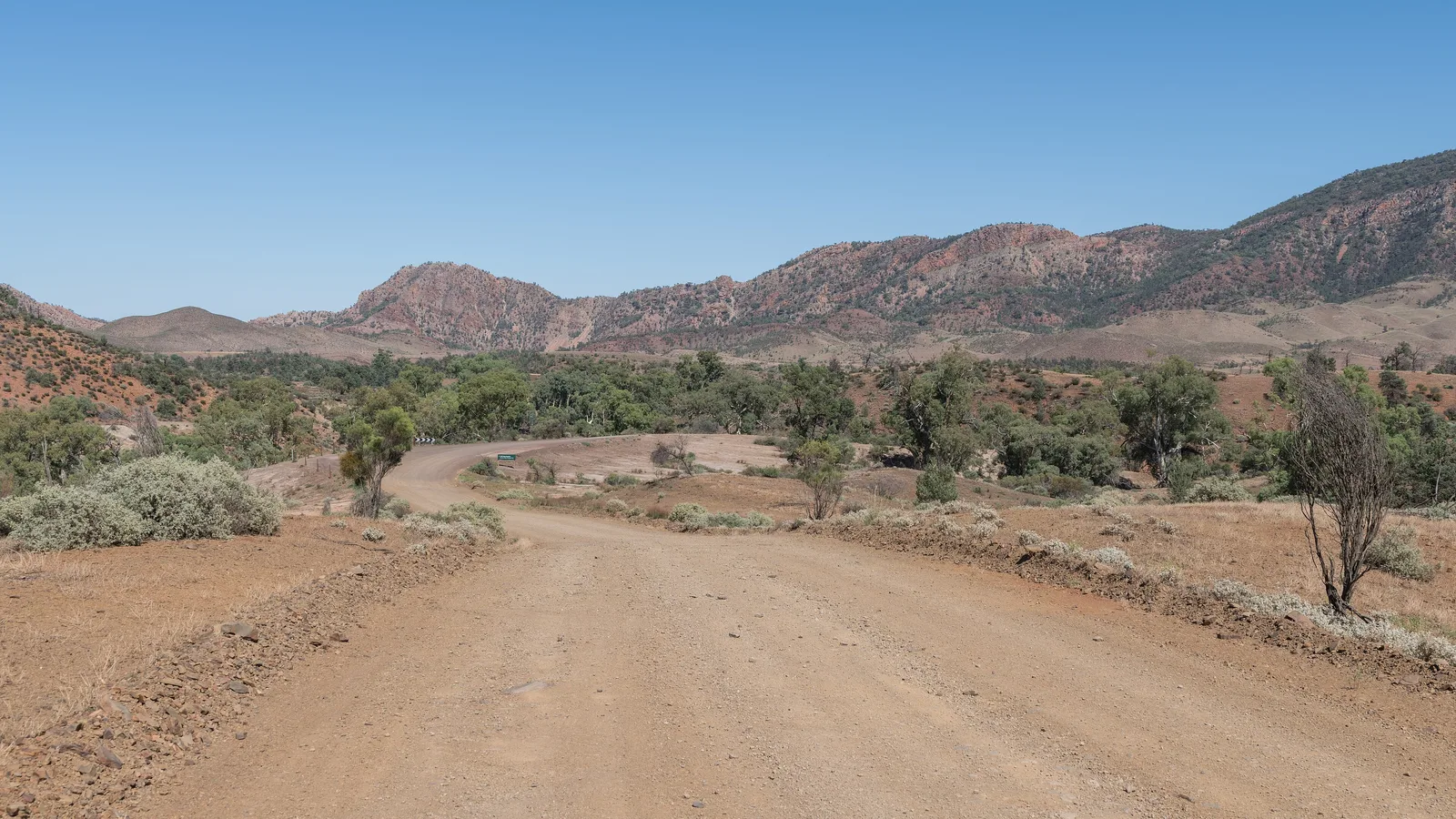
Inside the park the roads run through Brachina and Bunyeroo gorges and up towards the vast amphitheatre of Ikara Wilpena Pound. The country is semi-arid, with peaceful tree-lined gorges and a seasonal wealth of wildlife, and it is far enough north that the sense of space is the experience. Entry fees apply and must be paid before entry. The distances there put fuel planning in a different category, which outback fuel, water and isolation deals with directly.
Distances and what each park is known for are worth keeping in one place when you are stringing a state trip together:
| Park | Distance from Adelaide (km) | What it is known for |
|---|---|---|
| Deep Creek National Park | 105.01 | The largest remaining natural vegetation on the Fleurieu Peninsula, and Heysen Trail sections. |
| Murray River National Park | 239.81 | Murray wetlands and floodplains, spread across six separate areas. |
| Flinders Chase National Park, Kangaroo Island | 266.4 | Remarkable Rocks, Admirals Arch and a long-nosed fur seal colony. |
| Ikara-Flinders Ranges National Park | 454.05 | The Heysen Range, Brachina and Bunyeroo gorges, and Ikara Wilpena Pound. |
These are the park service's own road distances from Adelaide, not straight-line measurements.
The Murray and the Riverland
East of the ranges, the Murray River runs through the Riverland, and Murray River National Park conserves more than 14,879 hectares of wetlands and floodplains about 240 kilometres from Adelaide. It is divided into six separate areas — Katarapko, Lyrup Flats, Kingston-on-Murray, Paringa Paddock, Gurra Gurra and Bulyong Island — which means you plan a visit to one of them rather than to the park as a whole.
The roads are the caveat. The park's own alerts record clay tracks and campsites becoming saturated and inaccessible to all vehicles after rain, and track closures during environmental watering, with access shifting to whichever entrance is still dry. When it is wet, the riding plan is the bitumen.
- Six separate areas, with access varying from two-wheel-drive in dry conditions to four-wheel-drive or boat only.
- Clay tracks and campsites can become impassable to all vehicles after rain.
- Tracks are also closed for environmental watering, so check the park alerts before travelling.
- Entrances change with closures; read the alert to find out which one is open.
Plan the Riverland around the river and its towns, not around the park boundary.
Kangaroo Island caveats
Kangaroo Island needs the most planning of any South Australian ride. Flinders Chase National Park, at the island's western end, holds Remarkable Rocks, Admirals Arch and a long-nosed fur seal colony, and the park service measures it at about 266 kilometres from Adelaide.
Two caveats matter to a rider. Site entry fees apply and must be paid before entry, and tickets are sold online or at the visitor centre rather than at a gate you can ride through. And access is weather dependent: West Bay Campground, West Bay Road and Shackle Road may be closed seasonally because the roads are unsafe after rain, so a route that works in a dry week may be shut after a wet one.
The park's own guidance is to drive carefully at all times, especially at dawn and dusk. On an island with dense wildlife and long stretches between towns, that is the whole riding plan in one sentence.
- Site entry is charged per person rather than per vehicle, so check the fee before you commit.
- Some island roads close seasonally after rain; ask locally rather than assuming a route is open.
- Wildlife is dense and active at dawn and dusk, so keep riding light to daylight hours.
- The island is reached by ferry crossing or by flight, and that timetable shapes the day.
If the island is one part of a bigger South Australian trip, plan around the roads that stay open rather than the ones on the map.
Questions riders ask
Is there good riding close to Adelaide?
Yes. The Adelaide Hills begin about 20 minutes from the city centre, and the Fleurieu Peninsula is a short run south: Deep Creek National Park is about 105 kilometres from Adelaide by the park service's measure.
Do South Australian national parks charge entry?
Some do, and fees must be paid before entry. Flinders Chase National Park on Kangaroo Island charges per person, while other parks charge per vehicle for day entry. Check the individual park's fees and alerts page before you travel.
What should I know before riding on Kangaroo Island?
Three things. Site entry fees apply and must be paid before entry, some roads may close seasonally because they are unsafe after rain, and wildlife is dense — the park advice is to drive carefully at all times, especially at dawn and dusk.
When should I ride the Flinders Ranges?
The Flinders are semi-arid country, so heat is the constraint and the cooler months are the sensible window. Ikara-Flinders Ranges National Park is about 454 kilometres from Adelaide, which is better broken over two days than ridden in one.
Sources
- National Parks and Wildlife Service South Australia — Ikara-Flinders Ranges National Park — environment.sa.gov.au
- National Parks and Wildlife Service South Australia — Deep Creek National Park(environment.sa.gov.au)
- National Parks and Wildlife Service South Australia — Flinders Chase National Park and Ravine Des Casoars Wilderness Protection Area(environment.sa.gov.au)
- National Parks and Wildlife Service South Australia — Murray River National Park(environment.sa.gov.au)
- South Australia — Adelaide Hills(southaustralia.com)